 Simple Household Budget
Budget categories: which, how many, what for
For everyday spending eight to twelve categories are usually enough – such as groceries, eating out, transport, clothing, health, personal care, hobbies and gifts. Fixed costs like rent and insurance don't need an everyday category; you subtract them first. If you're just starting, you can leave categories out entirely.
Updated: November 2026
A lean category list
| Category | What goes in |
|---|---|
| Groceries | supermarket, bakery, market, drinks at home |
| Eating out | restaurants, takeaway, delivery, canteen |
| Going out | bars, clubs, cinema, concerts |
| Transport | fuel, tickets, parking, bike, taxi |
| Clothing & accessories | clothes, shoes, bags, jewellery |
| Personal care | toiletries, hairdresser, cosmetics |
| Health | pharmacy, prescriptions, glasses |
| Hobbies & leisure | sport, books, games, courses |
| Home & furnishing | furniture, decor, tools, appliances |
| Tech | phone, accessories, computer, apps |
| Gifts | birthdays, weddings, Christmas |
| Travel | accommodation, getting there, day trips |
If an expense fits nowhere, “No category” is more honest than a “Miscellaneous” pot that grows every month.
How many categories make sense?
Every category is a decision at every purchase. Twenty categories means twenty chances to get stuck. So:
- To start: none or two. Say groceries and on the go, with everything else left without a category – or amounts only: simple household budget.
- After a month: split the areas where you really want to know where the money goes.
- Rarely more than twelve to fifteen for everyday spending. If you haven't used a category for three months, drop it.
Fixed costs stay out of everyday categories
Rent, utilities, insurance and subscriptions go out every month anyway. Mixed in with your shopping, they hide what's happening day to day. Better: collect fixed costs once and subtract them from income – the list is in fixed expenses list.
Settle the grey areas once
- Toiletries bought at the supermarket: split on the receipt or all under groceries – as long as it's always the same.
- Lunch at work: its own category if it's regular; it's often bigger than you'd think.
- Online orders: sort by purpose (clothing, tech), not by retailer.
With the app
Categories in Simple Household Budget
The app comes with a lean default list – including Groceries, Eating out, Lunch at work, Transport, Personal care, Health, Clothing & accessories, Gifts and Travel. You can rename and remove categories and add your own. There's deliberately no “Miscellaneous”; there's “No category” instead.
The category is optional. When you type a description, the app suggests a matching category – from your own earlier entries and a built-in word list, on the device only. There's no breakdown by category; the category is shown under each entry in the history.
Get it on Google Play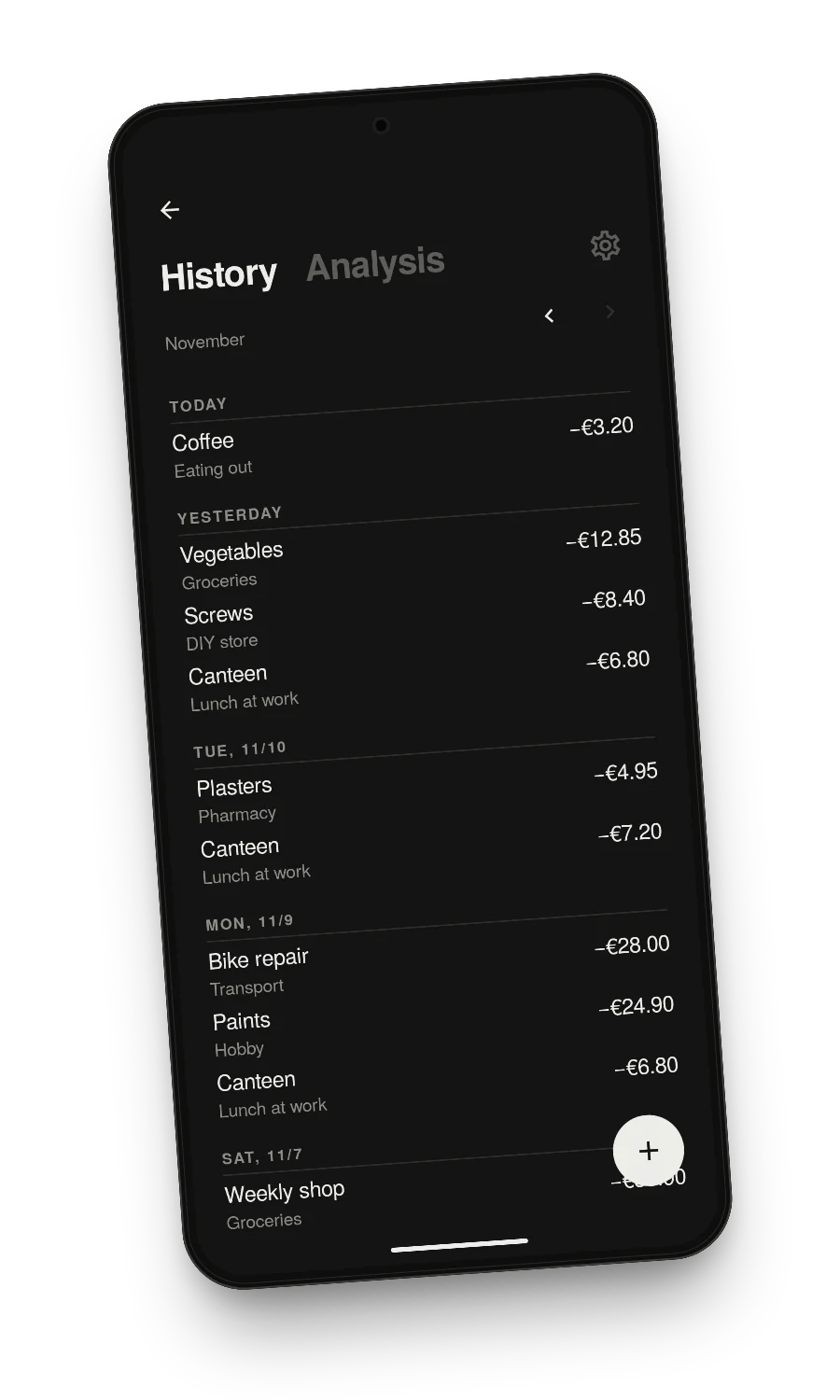
Questions
Do I need categories at all?
Not to know how much is left. Categories help when you specifically want to know where the money goes – for example before deciding where to cut.
Where does fuel go?
Under transport. Snacks or drinks bought at the petrol station are really groceries; if you want to keep it simple, put the whole receipt under transport.
What about cash withdrawals?
The withdrawal itself isn't spending. Only what you buy with the cash belongs in the budget – otherwise you count it twice or not at all.